Close


Meibomian gland dysfunction (MGD) is a leading cause of dry eye syndrome. The meibomian glands, located in the eyelids, secrete oils that are essential for maintaining a stable and healthy tear film. When these glands become clogged or function improperly, the oil layer of the tear film becomes deficient, resulting in increased tear evaporation and symptoms of dryness and irritation.
While MGD is a primary contributor, several other factors can cause or worsen dry eye syndrome, including:
Age: Tear production naturally declines as we age.
Environmental factors: Exposure to wind, dry air, and smoke can accelerate tear evaporation.
Hormonal changes: Shifts in hormone levels—such as those occurring during pregnancy, menopause, or with contraceptive use—can impact tear production.
Prolonged screen use: Extended periods of screen time reduce blink frequency, leading to faster tear evaporation.
Rosacea: Inflammation associated with rosacea can affect the eyelids and meibomian glands, disrupting the tear film and causing ocular surface dryness.
Medical conditions: Autoimmune disorders such as Sjögren’s syndrome, rheumatoid arthritis, and diabetes are linked to decreased tear production.
Medications: Certain medications, including antihistamines, antidepressants, and some blood pressure drugs, can reduce tear secretion.
A thorough evaluation by an eye care professional is essential to determine the underlying causes and develop an effective treatment plan for dry eye syndrome.

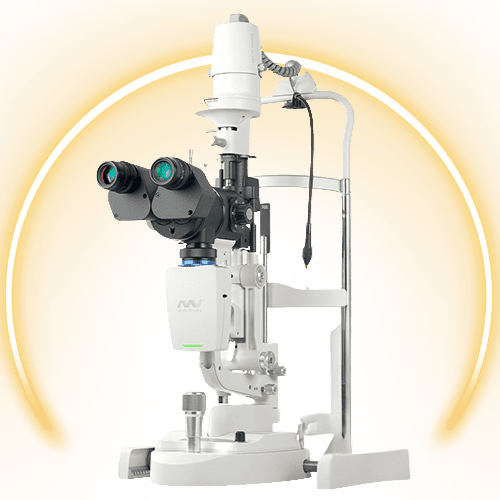
The Firefly WDR Digital Anterior Segment and Meibography Slit Lamp by Mediworks is an advanced diagnostic tool to enhance the evaluation of ocular surface conditions, particularly dry eye disease.
This state-of-the-art slit lamp combines wide dynamic range (WDR) imaging with high-definition digital capabilities, providing detailed visualization of the anterior segment of the eye.
One of its standout features is the meibography function, which allows for the non-invasive imaging of the meibomian glands. These precise images enable us to accurately diagnose meibomian gland dysfunction (MGD), assess gland health, and monitor changes over time.
This comprehensive diagnostic tool aids in tailoring effective treatment plans for patients suffering from dry eye.
After pinpointing the root causes of using our advanced diagnostic tools, our Burnaby team offers a range of targeted dry eye treatments to alleviate symptoms and enhance overall eye health. We focus on sustainable solutions that optimize tear production and quality, thereby restoring and maintaining the natural balance of your tear film and improving your visual comfort and eye health long-term. Our approach includes:
InMode Lumecca Intense Pulse Light (IPL)
Radiofrequency (Forma-i from Inmode)
Medicated Eye Drops
Heated Compresses
Anti-Inflammatory and Medicated Eye Drops
Manual Gland Expression
Supplements


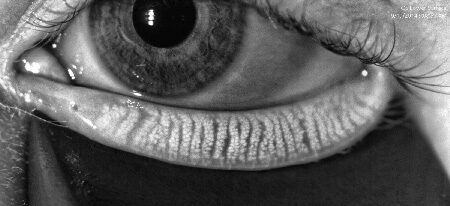
Meibomian glands produce the oils needed for a healthy tear film
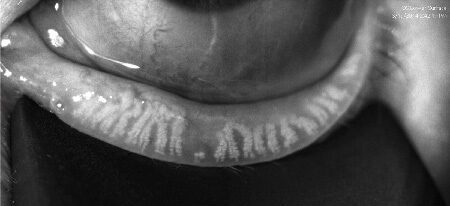
MGD occurs when the meibomian glands become blocked. If this blockage is left untreated the glands will drop out entirely.
Lucent Family Eye Care’s commitment to treating DES begins with thoroughly understanding each patient’s unique situation. We delve into in-depth questions about your lifestyle and conduct a comprehensive evaluation of your eye health using the Envision by InMode system.
This advanced diagnostic tool employs imaging technology to assess the eye’s surface accurately, enabling our optometrists to pinpoint the root causes of your dry eye condition. With these insights, we can develop treatment plans that are effective and personalized, ensuring we meet your specific needs and achieve the best possible outcomes.
InMode Lumecca Intense Pulse Light (IPL) treatment is a non-invasive therapy that uses light pulses to address inflammation and other underlying causes of dry eye syndrome. It primarily targets the meibomian glands responsible for producing the oily layer of the tear film. By improving the function of these glands, IPL treatment helps to stabilize the tear film, reduce tear evaporation, and alleviate symptoms of dry eye, thereby promoting healthier and more comfortable eyes.
Radiofrequency treatment using Forma-i from InMode primarily focuses on improving the function of the meibomian glands in the eyelids. This non-invasive treatment applies controlled radiofrequency energy to gently heat the eyelid tissues. The heat helps to unclog the oil glands, promoting better secretion and quality of the oils that form part of the tear film. This in turn helps to stabilize the tear film, reduce tear evaporation, and alleviate the symptoms of dry eye syndrome.

Are you looking for more information about dry eye? See our FAQ section, where our team answers common questions. If you need more personalized guidance, book a consultation at Lucent Family Eye Care for a detailed evaluation with our Burnaby eye doctors.
Watery eyes can paradoxically be a symptom of dry eye. This occurs because the dryness on the eye’s surface sometimes triggers an overproduction of the watery component of tears as a reflex response to irritation. However, these tears are not effective in properly lubricating the eye, leading to a cycle of dryness and excessive tearing.
Currently, there is no cure for dry eye syndrome; however, numerous treatments are available that can help manage the symptoms effectively. Treatments vary depending on the underlying cause and severity of the condition. The goal of treatment is to restore the normal function of the tear film to improve eye comfort and health.
When using digital devices, our blink rate typically decreases by about 66%, significantly increasing the risk of developing DES. Blinking is essential for maintaining eye health as it replenishes and spreads the tear film evenly across the surface of the eye. A reduced blink rate means the tear film is less frequently renewed, leading to dryness. Additionally, incomplete blinking can leave dry spots on the cornea, further exacerbating discomfort. Incorporating regular blinking exercises can help mitigate these symptoms.
Here are a few tips that may help you combat symptoms of DES when using a digital device:
Yes, LASIK surgery can lead to dry eyes. During the procedure, the creation of the corneal flap can disrupt the nerves in the cornea, temporarily decreasing tear production. Many patients experience dry eye symptoms following LASIK, but these symptoms are usually temporary and can be managed effectively with treatments such as artificial tears and other dry eye therapies.
Several factors can increase the risk of developing dry eye after LASIK surgery. These include:
Additionally, environmental factors and screen time can exacerbate dry eye symptoms post-LASIK. Patients should discuss their eye health history with their surgeon to assess their risk and manage it appropriately.

We're excited to introduce the revolutionary radiofrequency technology, Forma-i from Inmode, along with intense pulsed light therapy using Lumecca-i from Inmode to treat dry eyes.

Take the DEQ-5 Dry Eye Questionnaire to assess the symptoms of your eyes that could be hindering the quality of your vision.